Location
Prabhat foundation, Paldi, GJ
San Francisco, USA
Project
Design for Special Needs
UI/UX Design, Web Development
Impact
Helping kids with CP
2025

01
Overview
Cerebral palsy (CP) is a neurological condition that can present as issues with muscle tone, posture and/or a movement disorder. It’s the result of damage to your brain during fetal development or another developmental disability that affects the way your brain develops. The signs and symptoms of CP appear early in childhood and can vary widely from person to person.



02
Approach & Design Brief
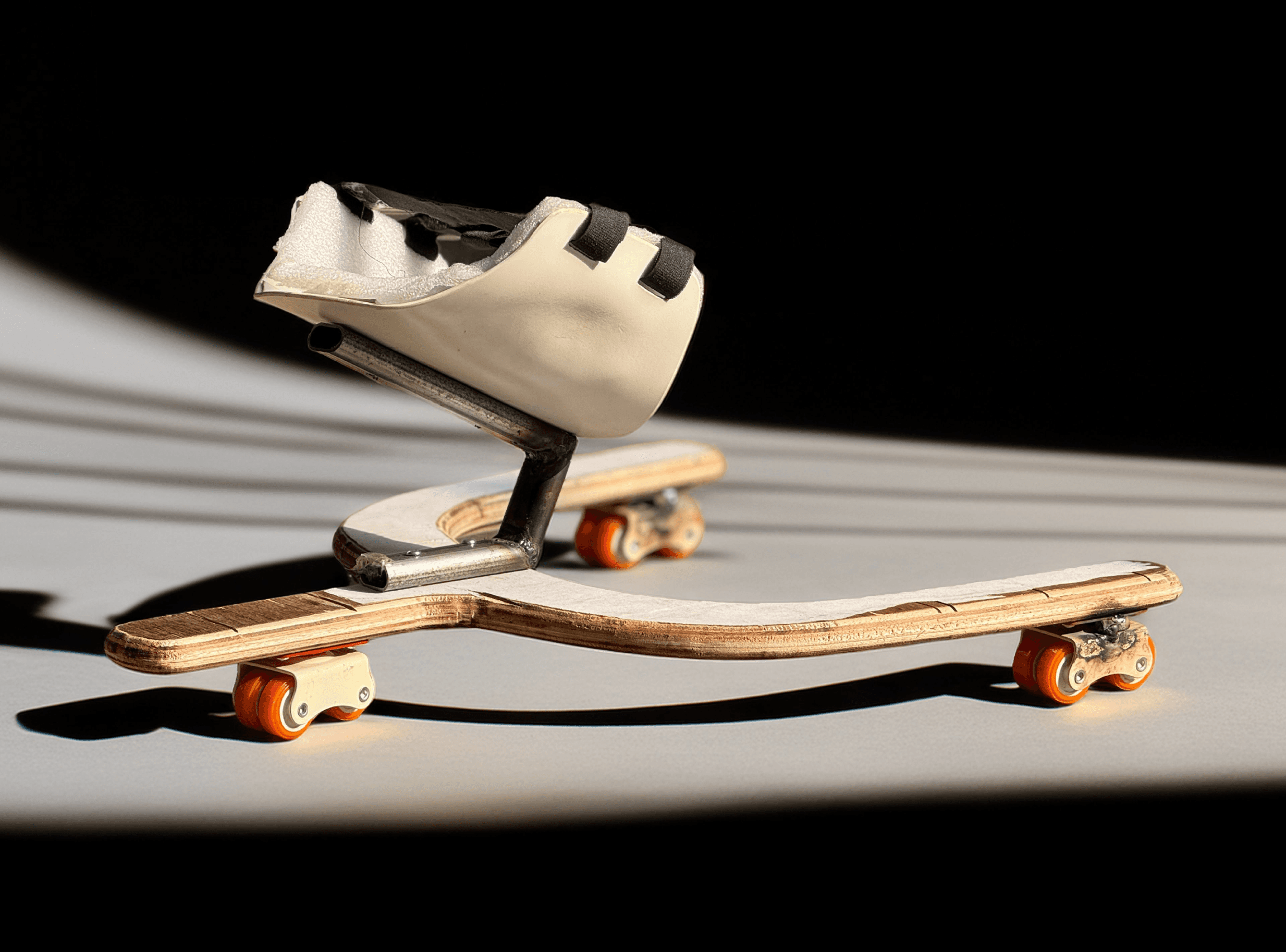
The design approach began with studying physiotherapy exercises and observing children. This was followed by posture analysis and collecting anthropometric data to understand user needs. Insights from this research guided ideation, which was explored through iterative prototyping and testing. Each iteration helped refine what worked best, leading to the final design solution.
Design Brief:
Design a child-friendly therapeutic device for children with cerebral palsy (ages 3–7) that supports the transition from creeping to a proper crawling posture.


03
Prototype & Process
Used a standard fabric combined with polystyrene pieces that acted as the structural framework or "skeleton" of the product. A single metal industrial magnet was integrated at the bottom, allowing it to securely attach to the magnet on the dustbin. The design allowed for smooth folding and unfolding, making access and re-locking the dustbin both simple and efficient. This actually made it a simple product design.


04
Testing out the Prototypes
Testing revealed key improvements such as wheel caps for finger safety, added counterbalance for stability, a front rotating wheel for easy turning, optimised wheel size for movement efficiency, and adjustable torso height to fit different children.


05
Final design & Renders
Testing revealed key improvements such as wheel caps for finger safety, added counterbalance for stability, a front rotating wheel for easy turning, optimised wheel size for movement efficiency, and adjustable torso height to fit different children.


